

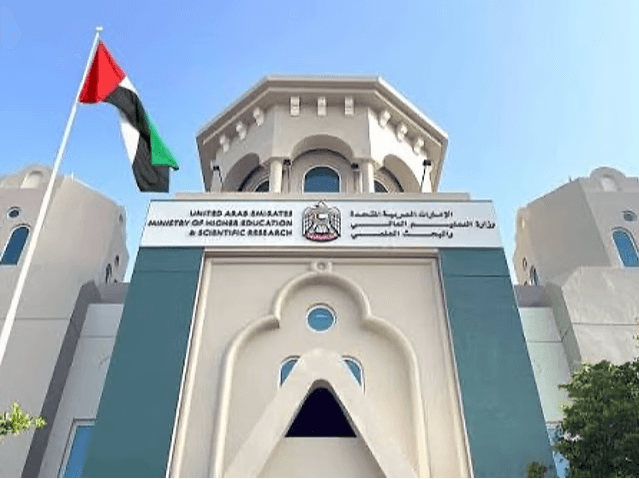
One in five future UAE jobs will be entirely new: What the Ministry's latest data means for students choosing a career path
For UAE students weighing subject choices, university majors or a first career move, the Ministry of Higher Education and Scientific Research has just put hard numbers behind a question that has been building for years: how much of what today's classroom teaches will still be relevant by the time this generation enters the workforce?
The answer, according to the Ministry's own Emirates Skills indicators, is that the UAE labour market is shifting fast, and not in a way that rewards standing still.
The headline numbers
The Ministry's data breaks the UAE job market into three groups, based on how AI, robotics and advanced engineering are reshaping demand:
87 per cent of existing jobs are expected to see rising demand, particularly in advanced engineering and sales roles, reflecting the growing need for professionals who can support technological and economic transformation.
20 per cent of future jobs are expected to be entirely new. The Ministry names specific examples already emerging: robotics operations supervisors, AI systems quality assurance technicians, and manufacturing engineers, all driven by artificial intelligence and the Fourth Industrial Revolution.
13 per cent of current jobs are considered stagnant, largely covering routine administrative, support and office functions increasingly affected by digital transformation, automation and smart technology adoption.
The Ministry said the findings reinforce the importance of aligning education outcomes with labour market needs, and of strengthening investment in future-ready skills to support the UAE's competitiveness in the knowledge economy.
What this actually means: rising demand, not job loss
It is worth being precise about what these numbers say, because the framing matters for how a family reads them. The 87 per cent figure is not jobs at risk. It is jobs expected to become more valuable, provided the people doing them keep developing the right skills. The clear message from the Ministry's own data is that most of today's careers are not disappearing, they are evolving, and the people who evolve alongside them are the ones who benefit.
That distinction lines up with separate findings from PwC's 2026 Global AI Jobs Barometer, which found that AI is changing the nature of work far more than it is eliminating jobs outright. Globally, companies most exposed to AI recorded 40 per cent higher productivity growth than the least AI-exposed firms, and those companies also saw stronger headcount growth and faster wage increases, not job cuts.
The salary case for AI skills, in real numbers
For UAE families wondering whether investing in AI literacy is worth the effort, PwC's data offers a concrete answer. Employees with AI capabilities in the UAE can command significant wage premiums compared to workers in similar roles without those skills. The gains are largest in financial services, where AI skills carry a 92 per cent wage premium, and in technology, media and telecoms, where the premium sits at 50 per cent.
The UAE has also climbed sharply in global AI hiring rankings. The share of UAE job postings requiring AI skills more than tripled between 2021 and 2025, rising from 1.0 per cent to 3.2 per cent, pushing the country from 21st place globally to 13th in just four years. The number of UAE job advertisements requiring AI skills rose from roughly 4,600 in 2021 to 12,200 in 2025, with around 2,700 of those new postings appearing in 2024 and 2025 alone.
You do not need to be a coder: the rise of the "AI User"
One of the more reassuring findings for parents whose children are not necessarily headed toward computer science is that most of the UAE's AI-driven hiring growth is not about building AI systems. It is about using them well.
PwC found demand is dominated by "AI User" roles, which grew 28 per cent over the past year. These are jobs where employees apply commercially available AI tools to improve productivity, automate routine work, analyse information faster, or support decision-making, not specialist machine learning roles. Employers are increasingly looking for finance professionals who use AI, marketers working with AI-powered content tools, HR teams using AI for recruitment, and consultants integrating AI into client work.
In practical terms, this means AI fluency is becoming a baseline employability skill across almost every career path a UAE student might choose, not a niche add-on reserved for engineering or computer science students specifically.
Skills are changing faster in the UAE than almost anywhere else
PwC's report also found that UAE jobs most exposed to AI are evolving unusually quickly. The UAE's AI-exposed occupations scored an average skills transformation rate of 7.22, well above the global average of 4.47. In practical terms, workers in AI-exposed UAE roles will need to update their skills roughly twice as often as those in less-exposed occupations, which is exactly why the Ministry's emphasis on "future-ready skills" is not abstract policy language. It reflects a labour market that is genuinely moving faster than most of the world.
What this means for UAE students and families right now
For families with children still choosing subjects, curricula or university majors, three practical takeaways follow from this data.
Judgement, creativity and problem-solving are becoming more valuable, not less. The Ministry and PwC both frame AI's effect on jobs the same way: routine, repetitive tasks shift to technology, while human-centred capabilities such as judgement, creativity and complex problem-solving become more, not less, in demand. Subject choices and extracurricular experiences that build these skills directly, not just technical ones, remain genuinely valuable.
AI literacy belongs in every pathway, not just STEM. Given that most AI-related hiring growth is in "AI User" roles spanning finance, marketing, HR and consulting, students heading toward business, humanities or social sciences benefit just as much from building genuine comfort with AI tools as those heading toward engineering or computer science.
This connects directly to what UAE schools and universities are already building. The Ministry of Education's Project Nova initiative is embedding AI-driven infrastructure across the country's education system, while the UAE Skills Platform is already helping more than 200,000 students map their interests against future-focused skills and labour-market intelligence. For families researching schools and universities, asking directly how a given institution builds AI literacy and future-skills development into its curriculum, not just its marketing, is now a genuinely useful admissions question.
The bigger picture
Taken together, the Ministry's Emirates Skills indicators and PwC's AI Jobs Barometer describe the same underlying shift from two different angles: a UAE labour market moving quickly toward AI-augmented work across nearly every sector, rewarding people who adapt with real, measurable salary premiums, and creating entirely new categories of jobs that did not exist a few years ago. For UAE students and the parents guiding their choices, the data is less a warning than a fairly clear map of where the value is heading, and it points toward adaptability and AI fluency mattering everywhere, not just in the subjects that have traditionally been labelled "technical."
Sources:
Gulf News, "One in five future UAE jobs will be entirely new" by Huda Ata (July 25, 2026). https://gulfnews.com/uae/education/one-in-five-future-uae-jobs-will-be-entirely-new-1.500619715
Gulf News, "UAE jobs: AI skills can earn workers up to 92% higher salaries, PwC finds" by Justin Varghese (July 7, 2026). https://gulfnews.com/business/markets/uae-jobs-ai-skills-can-earn-workers-up-to-92-higher-salaries-pwc-finds-1.500599976
